

Rheum Rundown: Gout
The educational content contained within this Rheum Rundown was developed independently by the Rheumatology Nurses Society (RNS) and its clinical faculty. Any sponsor provided information is clearly identified and presented separately from the educational content.
1. What Is Gout?
Gout is a systemic inflammatory arthritis caused by monosodium urate (MSU) crystals depositing in joints and soft tissues. Crystal formation is associated with chronic hyperuricemia or persistently elevated serum urate (serum urate levels >6.8 mg/dL). Excess urate, which can be due to overproduction or underexcretion, leads to MSU crystal formation, which can then cause acute flares. Key impacts include recurrent painful attacks, potential progression to chronic tophaceous gout with joint damage, deformity, and disability, plus associations with comorbidities like cardiovascular disease, kidney stones, and chronic kidney disease.
2. Key Signs and Symptoms
In early stages of gout, symptoms associated with flares may come and go. However, even during asymptomatic periods urate crystals can remain inside the joints and continue to silently deposit. Left untreated or undertreated, tophi (pronounced toe-fye) can form. Tophi are large crystal deposits that look like bulbous, swollen growths under the skin.
- Hallmark symptoms:
- Sudden, severe pain (often described as excruciating)
- Swelling, erythema (redness), warmth, and tenderness in the affected joint
- Peak intensity within 24 hours; commonly monoarticular
- Systemic manifestations: Fever (especially in polyarticular flares), malaise, chills
- Extra-articular involvement: Tophi (subcutaneous urate deposits, e.g., ears, olecranon, fingers), kidney stones (uric acid nephrolithiasis), chronic arthropathy with joint destruction
3. Risk Factors
Genetic:
- Family history, genetic variants affecting urate transport and renal excretion
Environmental:
- Medications (diuretics like thiazides/furosemide, low-dose aspirin)
- Dehydration, lead exposure
Demographic:
- Male sex
- Older age
- Postmenopausal women
Lifestyle:
- Diet high in purines (red meat, organ meats, shellfish, fructose-rich drinks)
- Alcohol (especially beer)
- Obesity
- Sedentary lifestyle
Medical Conditions
- Untreated high blood pressure
- Diabetes
- Obesity
- Metabolic syndrome
- Heart disease
- Kidney disease
4. Diagnosis
History and Physical
- History of joint pain, swelling, redness-frequency, severity, number of involved joints, what has worked
- Joint exam
Labs:
- Serum urate >6.8 mg/dL. Note: Serum urate can temporarily drop during an acute gout attack due to increased urinary excretion or inflammatory shifts, so levels should be tested during asymptomatic periods.
- Synovial fluid analysis using polarized light microscopy (gold standard: needle-shaped, negatively birefringent MSU crystals)
- Inflammatory markers (elevated WBC, ESR, CRP during flare)
Imaging:
- Ultrasound (double contour sign on cartilage, tophi, effusions)
- Dual-energy CT (DECT- also referred to as a Spectral CT or Multi-energy CT scan )
- Plain X-rays (late: punched-out erosions with overhanging edges, tophi)
Clinical criteria:
- ACR/EULAR classification criteria (score-based: entry criterion of ≥1 episode of swelling/pain/tenderness in peripheral joint/bursa; points for MSU crystals, tophi, typical podagra, rapid onset, etc.; ≥8 points classifies as gout)
5. Treatment Goals
Short-term (if presenting during flare):
- Rapidly resolve acute flares and control pain/inflammation
Long-term:
- Achieve and maintain serum urate <6 mg/dL (treat-to-target strategy) which is associated with:
- Inhibiting formation of new MSU crystals
- Dissolving existing MSU crystals (including reduction of tophi)
- Preventing recurrent flares
- Preventing/minimizing joint damage/deformity
- Reducing risk of, or helping minimize, comorbidities such as CKD
6. Medications
Symptom Relief:
- NSAIDs
- Colchicine
- Corticosteroids (oral, intra-articular, or systemic)
- IL-1 inhibitors (e.g., anakinra) for refractory cases
Conventional / Foundational:
- Xanthine oxidase inhibitors (block body’s production of uric acid): Allopurinol (first-line, start low dose especially in CKD) or febuxostat
- Uricosurics(increase renal excretion of urate): Probenecid (only if normal renal function)
Biologic Therapies:
- Pegloticase (IV uricase enzyme) for refractory/uncontrolled gout with persistent high urate, frequent flares, or tophi
Targeted Synthetic Therapies:
- Emerging options (e.g., investigational URAT1 inhibitors or combinations like nanoencapsulated sirolimus with pegadricase)
Other:
- Flare prophylaxis (low-dose colchicine or NSAID) when starting ULT
7. Management & Nursing Considerations
Patient Education:
- Explain disease as treatable chronic condition; stress adherence to ULT to prevent flares/damage
- Recognize flare triggers (diet, dehydration, injury) and early signs
- Teach medication adherence, including prophylaxis to avoid mobilization flares
- Provide patient with office contact information for assistance with flare management
- If a prescription is provided for a potential flare, educate the patient on when and how to take the medication and when to contact the office.
Physical Activity & Lifestyle:
- Encourage weight loss if obese, regular low-impact exercise (once flare resolves), hydration (2-3 L/day)
- Low-purine diet: limit red meat, shellfish, alcohol (especially beer), sugary drinks; emphasize vegetables, low-fat dairy, cherries/vitamin C
Monitoring:
- Serial serum urate (target <6 mg/dL)
- Renal function, CBC, liver tests (for ULT side effects)
- Joint assessment for tophi, deformity; monitor for infection in flares
Emotional Support:
- Acknowledge severe pain impact on mobility/mood; provide empathy, refer to support groups if needed
8. Definitions & Key Terms
- Hyperuricemia — Elevated serum urate (>6.8 mg/dL), precursor to gout but not always symptomatic
- Monosodium urate (MSU) crystals — Needle-shaped crystals from urate deposition that trigger inflammation
- Podagra — Classic acute gout attack in the first metatarsophalangeal joint (big toe)
- Tophus/tophi — Subcutaneous or intra-articular deposits of aggregated MSU crystals
- Treat-to-target — Strategy of titrating ULT to achieve/maintain serum urate <6 mg/dL
- Flare — Acute inflammatory episode due to crystal shedding/immune response
- Urate-lowering therapy (ULT) — Medications to reduce serum urate and prevent
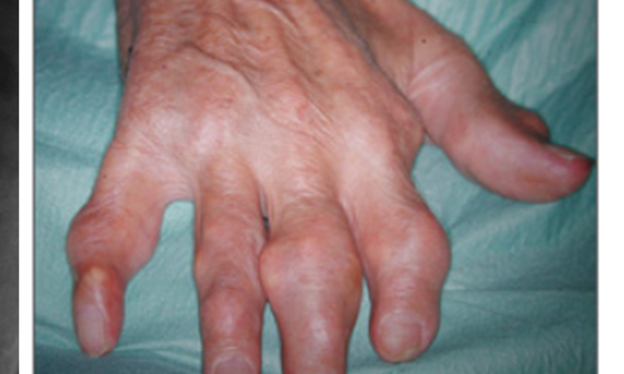
Tophaceous gout of the hand
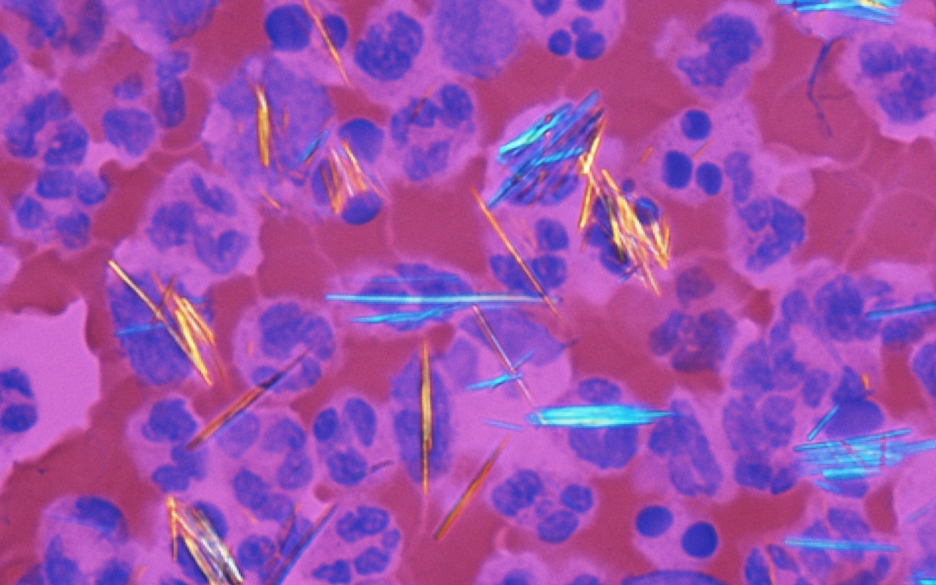
Monosodium Urate Crystals
9. References
- Mayo Clinic. (2022, November 16). Gout – Diagnosis and treatment. https://www.mayoclinic.org/diseases-conditions/gout/diagnosis-treatment/drc-20372903
- Arthritis Care & Research Vol. 72, No. 6, June 2020, pp 744–760 DOI 10.1002/acr.24180 © 2020, American College of Rheumatology
Authored by: Karen McKerihan, MSN, NP-C
Sponsored Content:
The following content is sponsored by Sobi

PATIENT RESOURCE DOWNLOAD:
Help patients track symptoms and prepare for their next appointment with the Tracking and Talking About Gout Guide.
Find more patient education at InsideGout.com.